

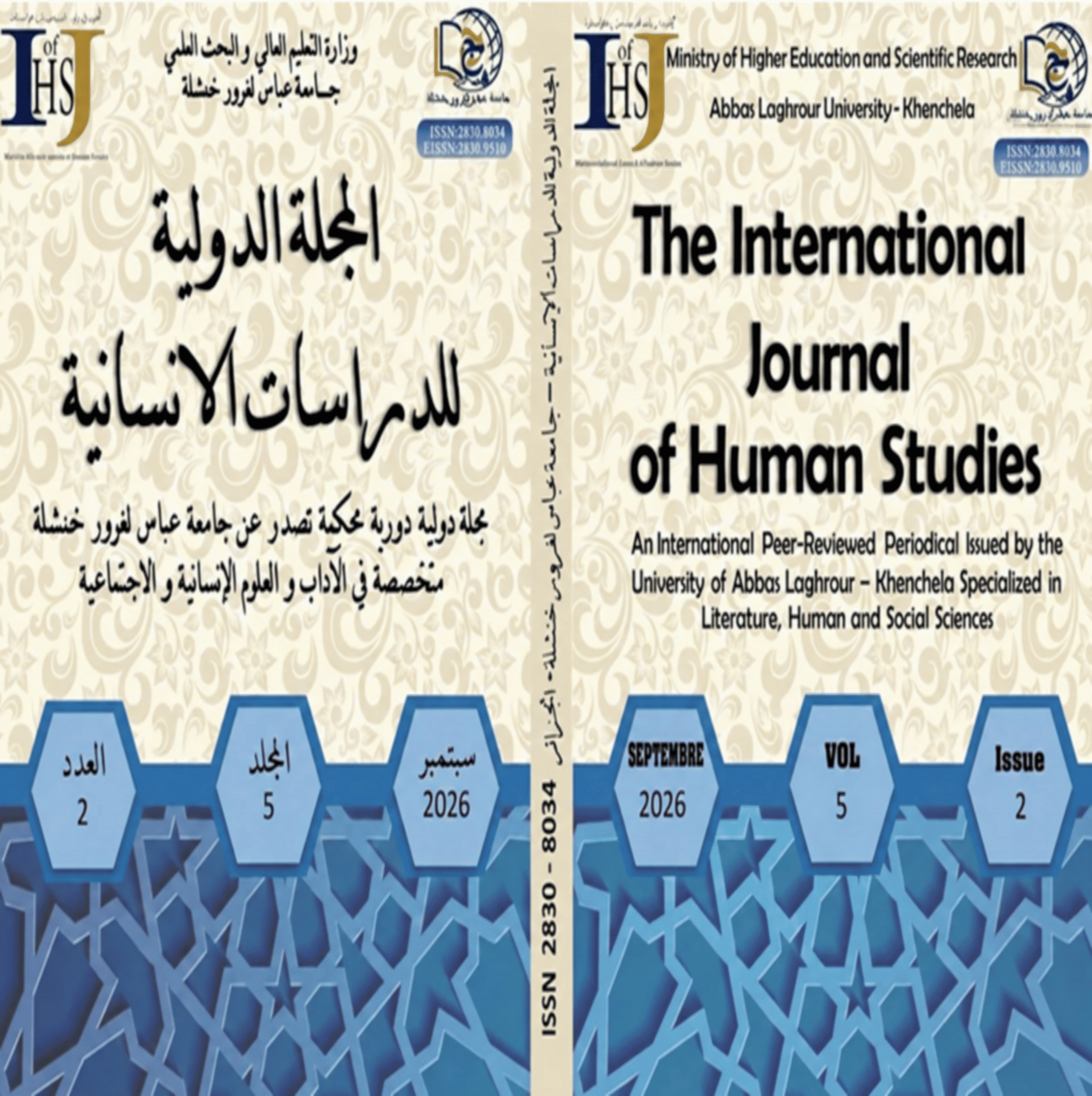
The International Journal of Human Studies
Publication Ethics
“The International Journal of Human Studies” publishes original, peer-reviewed scientific articles on topics in literature, languages, legal sciences, political sciences, humanities and social sciences, economic sciences and related disciplines, with the aim of providing high quality to its readers by adhering to the principles of the publication ethics code and preventing malpractice.
The journal’s ethical code is classified in accordance with the guidelines of the Committee on Publication Ethics (COPE), which represent the guiding basis for authors, researchers and other parties influencing the publication of articles in the journal, namely reviewers, advisors, copy editors and publishers. The journal seeks to establish unified standards of conduct, and is fully committed to ensuring their application, in acceptance of responsibility and in fulfilment of the duties and responsibilities assigned to each party:
- Responsibilities of the Publisher
- Publication decisions: The Editor-in-Chief is responsible for deciding on the submitted articles, relying on the journal’s editorial policies and on the legal requirements relating to defamation, copyright infringement, plagiarism and libel. The Editor-in-Chief may consult the editorial board or the reviewers when making these decisions.
- Integrity and fair evaluation: The Editor-in-Chief ensures that all articles are evaluated on the basis of their scientific content only, without regard to the author’s race, gender, religion, political affiliation or cultural background.
- Confidentiality: The Editor-in-Chief, the members of the editorial board and its staff undertake to maintain the confidentiality of all submitted articles, and not to disclose any information except to the parties concerned, such as authors, reviewers, editorial advisors and the publisher.
- Express consent: The research findings of others relating to unpublishable articles may not be used or exploited without written permission or authorization from their author.
- Responsibilities of the Reviewer
- Contribution to editorial decisions: Reviewers help the Editor-in-Chief and the editorial board make publication decisions by providing critical reviews, which also help authors improve and correct their articles.
- Punctuality: A reviewer who feels unqualified to review the article, or who cannot complete the review within the specified time, must immediately inform the Editor-in-Chief and decline the review.
- Confidentiality: Articles submitted for review are treated with complete confidentiality, and must not be discussed or shared with other parties except with the authorization of the Editor-in-Chief.
- Objectivity and impartiality: Reviews must be objective and constructive, and personal criticism of the author is prohibited. Opinions should be expressed clearly and supported by strong scientific evidence and grounds.
- Acknowledgement and identification of sources: Reviewers must identify any relevant sources not cited in the article and direct the authors to refer to them. They must also inform the Editor-in-Chief of any substantial similarity or overlap between the submitted article and other published works.
- Conflicts of interest and misuse of information: Information obtained during the review process must remain confidential and must not be used for personal gain. Reviewers should decline to review articles if they have a conflict of interest with the authors or the institutions involved.
- Responsibilities of the Author
- Accuracy and transparency (preparation standards): Authors must present the results of their research accurately and objectively, providing sufficient detail to allow others to replicate the study. They must adhere strictly to the article’s formatting and the journal’s template, ensure that the text has been linguistically edited before submission, and refrain from submitting false or misleading data.
- Originality and plagiarism: Authors must ensure that their work is entirely original, with appropriate reference to all sources and ideas taken from others. The journal reserves the right to use plagiarism-detection software to screen submitted articles and ensure their originality.
- Avoiding duplicate publication (redundant publication): Authors may not submit the same article to more than one journal or publish the same research in multiple places simultaneously, as this is considered unethical behavior and is strictly prohibited.
- Data retention: Authors must retain the raw data related to their research and provide it upon request to the Editor-in-Chief for verification.
- Disclosure and conflicts of interest: Authors must disclose any conflict of interest (financial or otherwise) that may affect the research results and their interpretation, and disclose the source of any financial support for their article project.
- Authorship of the article (attribution): Authorship is restricted exclusively to individuals who made a significant and clear contribution to the design, execution or analysis of the study. The corresponding author must be identified, and the original author must confirm the consent of all participants and the accuracy of their names and institutional affiliations.
- Citations and references: The author of the article must cite citations and references accurately and in accordance with the approved documentation system (APA), covering all books, publications, websites and the research of others quoted in the body of the text and in the final list.
- Reporting errors: If the author discovers a significant error or inaccuracy in their published work after its release, they must immediately inform the Editor-in-Chief or the publisher and cooperate to correct the error or withdraw the article.
- Copyright and Journal Policies
- Author and publisher rights: Upon acceptance of the article, copyright and authorship rights are transferred to “The International Journal of Human Studies” (Abbes Laghrour University – Khenchela), in both its print and electronic versions, in accordance with the pledge letter signed by the authors.
- Terms of use of the website and content:
- Individuals may not share the username or password of their accounts on the platform without the publisher’s permission.
- Individuals may view, download, print or save the journal’s content exclusively for scientific research and academic teaching purposes.
- Any use or copying, in whole or in part, of the journal’s materials must include the usual bibliographic citation (author’s name, date of publication, article title, journal name and website link).
- Disclaimer: Changes and updates may be made to the guidelines and contents of the journal’s publications at any time, as organizational and academic necessity requires.
- Privacy statement: The names and email addresses entered on the journal’s website and platform system (ASJP) are used exclusively for the journal’s own purposes and will not be made available to any third party or for other commercial purposes.
- Fees and expenses: The journal is academic and non-commercial and does not impose any financial fees on the submission, review, acceptance, publication or processing of articles.
- License (Creative Commons): Published papers retain copyright with the authors, while the journal and its contents are subject to the Creative Commons license: Attribution – NonCommercial – NoDerivatives (CC BY-NC 4.0).
- Open Access policy: All articles published in “The International Journal of Human Studies” are accessed freely and permanently online immediately upon release, without financial or technical barriers, including full texts, out of belief in the academic principle that “making research freely available to the public supports a greater global exchange of knowledge and scientific progress”.